Marine glazing has to do much more than provide a view.
A windshield or window may need to handle vessel movement, weather exposure, impact, changing temperatures and demanding installation conditions while still maintaining the optical quality and appearance expected by the vessel designer.
That is why high-performance marine glass should be specified as part of the vessel’s overall glazing system, not simply selected by thickness.
At ProCurve Glass Design, marine glazing may be flat or curved and can incorporate laminated constructions, tints, coatings, heated glass and other options based on the needs of the vessel.
What Is High-Performance Marine Glass?
For many marine applications, high-performance glazing uses a laminated construction in which multiple glass lites are permanently bonded together with an interlayer.
The purpose of the laminate is not simply to make the glass thicker. Depending on the specified construction, laminated glazing can help provide impact resistance and keep broken glass together after breakage rather than allowing the glazing to immediately fall out of the opening.
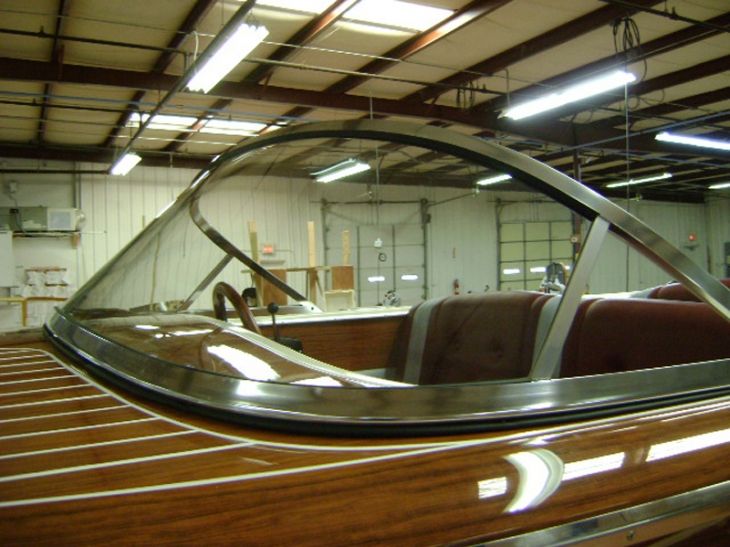
ProCurve manufactures specialty curved glass for recreational and commercial vessels and can produce marine glazing in cylindrical, conical and irregular forms.
Why Use High-Performance Glass on a Vessel?
Impact and Post-Breakage Performance
Marine windshields and windows operate in an environment where the glazing may be exposed to rough water, flying objects and other impact conditions.
For applications where retaining the glazing following breakage is important, laminated construction can be an important part of the design.
The exact makeup should be selected according to the vessel, installation and required performance rather than assuming that one laminate construction is appropriate for every boat.
Optical Quality and Visibility
A marine windshield is also part of the operator’s field of view.
Curved glazing can allow designers to create broader sightlines while reducing some of the divisions and framing that may otherwise interrupt visibility. Shape, curvature and optical quality therefore need to be considered together. ProCurve Glass Design, Inc.
Solar and Thermal Performance
Heat and sunlight can significantly affect comfort inside a vessel.
Depending on the project, marine glass may incorporate:
- Tinted glass
- Solar-control coatings
- Laminated constructions
- Insulating glass
- Heated glazing to address fogging or icing
These options should be identified early because they can affect the overall glass makeup and fabrication requirements. ProCurve currently offers tinted and heated marine-glass options as part of its marine capabilities. ProCurve Glass Design, Inc.
Privacy and Appearance
Marine glazing also plays an important design role.
Tinted interlayers, glass tints and, where appropriate, switchable privacy glazing can help achieve the visual and privacy goals of the vessel while maintaining the flowing appearance that makes curved marine glass desirable.
How to Specify High-Performance Marine Glass
There is no single marine-glass specification that works for every vessel.
These are the questions we recommend addressing before the glazing configuration is finalized.
1. Is the Glass Flat or Curved?
Define the required geometry as early as possible.
For curved glass, provide the radius and dimensions when they are known. If replacement glass must fit existing framing, templates or detailed drawings can be especially important.
ProCurve Templates:
https://www.procurveglass.com/templates/
2. What Type of Vessel Is the Glass Being Designed For?
A recreational powerboat, sailing vessel, yacht, ferry or commercial vessel may present different operating and performance requirements.
Consider where and how the vessel will operate, including whether the installation is intended primarily for near-shore use or more demanding offshore service.
3. Is the Glass Clear or Tinted?
Consider both appearance and visibility.
The glass itself may be clear or tinted, and laminated constructions may also incorporate clear or tinted interlayers.
4. Is Solar Control Required?
Determine whether reducing solar heat gain is part of the project requirements.
If a coating or specialized construction is needed, it should be incorporated into the glazing specification before production.
5. Is Privacy Glass Required?
If switchable or other privacy glazing is being considered, identify that requirement early so compatibility with the final curved or laminated construction can be reviewed.
6. How Will the Glass Be Installed?
Installation method affects the glazing design.
Consider:
- Bonded versus mechanically retained systems
- Whether glass edges will remain exposed
- Bite and edge-clearance requirements
- Sealant compatibility
- Surrounding frame dimensions
- Future removal and replacement
ProCurve’s marine work includes both framed and bonded glazing applications. ProCurve Glass Design, Inc.
7. What Laminate Construction Is Required?
If laminated glass is being specified, determine the appropriate glass plies and interlayer for the required application.
Important considerations include:
- Impact performance
- Post-breakage retention
- Overall thickness
- Weight
- Optical requirements
- Interlayer color
- Environmental exposure
8. Will the Glass Be Part of an Insulating Glass Unit?
An insulating glass construction may be appropriate when thermal performance is a significant project requirement.
This decision needs to be made early because an IGU is an assembly rather than simply a different glass thickness.
9. Are Strength and Stiffness Important to the Overall Thickness?
Do not select overall glass thickness based only on appearance or an existing opening.
Mechanical properties, dimensions, curvature, support conditions and project-specific loads can all affect the required construction.
10. How Important Is Post-Breakage Performance?
For some installations, retaining the glazing after damage is particularly important.
That requirement should be identified during specification so the appropriate laminated construction can be evaluated rather than considered after the rest of the windshield design is complete.
11. Does Existing Framing Limit the Glass?
Replacement projects frequently come with constraints that new-build projects do not.
Existing channels and frames may limit:
- Overall thickness
- Edge clearance
- Radius
- Glass size
- Installation method
Providing accurate drawings, dimensions or templates helps the fabricator determine what can be produced within those limitations.
12. Are There Customer, Class or Industry Requirements?
Identify any applicable customer specifications, vessel requirements, classification requirements or industry standards at the beginning of the project.
ProCurve manufactures within an ISO 9001:2015-certified production facility and states that its products are built to customer or applicable industry requirements. ProCurve Glass Design, Inc.
Why Early Collaboration Matters
Many marine-glass decisions are interconnected.
Changing the radius can affect fabrication. Changing overall thickness can affect the frame. Adding a coating or heating element can change the glass construction. A requirement for post-breakage retention may affect the laminate.
For that reason, involving the glass fabricator before the design is completely locked down can help identify conflicts while there is still time to resolve them.
Frequently Asked Questions About High-Performance Marine Glass
Is Marine Glass Always Curved?
No. Marine glazing can be flat or curved depending on the vessel and window or windshield design.
Is Marine Glass Laminated?
Many high-performance marine applications use laminated glass because the interlayer can help retain broken glass after impact. The appropriate construction depends on the specific application.
Can Curved Marine Glass Be Tinted?
Yes. ProCurve offers tinted marine-glass options, and tint or interlayer selection should be included as part of the specification. ProCurve Glass Design, Inc.
Can Marine Windshields Be Heated?
Yes. Heated glazing can be incorporated into certain marine windshield applications to help address fogging and icing. ProCurve Glass Design, Inc.
What Should I Send ProCurve for a Quote?
Provide as much project detail as possible, including dimensions, glass orientation, required performance, frame or glass sizes and project drawings. ProCurve’s current estimate form specifically requests detailed descriptions and allows project drawings to be uploaded. ProCurve Glass Design, Inc.
Specify the Glass Around the Vessel
High-performance marine glass is not a one-size-fits-all product.
The best result comes from considering the shape, laminate, optical requirements, installation, thermal performance, operating environment and framing as one system.
ProCurve works with boat builders, designers and other marine customers to develop custom curved and laminated glazing for yachts, sailboats, powerboats and commercial vessels. ProCurve Glass Design, Inc.
Learn more about ProCurve marine glass