When selecting glass for architectural or specialty applications, strength, durability, and performance all play a major role. Two popular options often compared are heat-treated glass and chemically strengthened glass. Both offer improvements over standard annealed glass, but they are produced differently and perform best in different situations.
Understanding how each type of glass is made and how it behaves can help you choose the right solution for your project.
Heat-Treated Glass
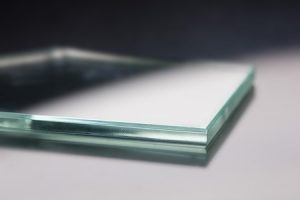
Heat-treated glass is designed to handle higher levels of stress caused by impact, temperature changes, and structural loads. It is commonly used in safety glazing, architectural installations, and custom curved glass applications.
How Heat-Treated Glass Is Manufactured
The process begins with glass that has already been cut to its final size. The glass is heated in a furnace to roughly 1,150 degrees Fahrenheit. Once it reaches the proper temperature, it is rapidly cooled using controlled blasts of air on both surfaces. This cooling process is what gives the glass its added strength.
Why Heat-Treated Glass Is Strong
As the glass cools, compression layers form on the outer surfaces while tension is created in the center. These compression layers make up about 20 percent of the total thickness of the glass and help it resist breaking under stress.
One important advantage is that heat treatment does not change the appearance or performance characteristics of the glass. Color, clarity, light transmission, stiffness, and thermal properties all remain the same as annealed glass. The difference is durability. Heat-treated glass can be up to four times stronger than annealed glass of the same thickness, making it a reliable option for demanding environments.
Chemically Strengthened Glass
Chemically strengthened glass increases strength through a chemical process rather than heat. This method is often used when thinner glass or specific performance characteristics are required.
How Chemical Strengthening Works
The glass is placed in a molten salt bath, most commonly potassium nitrate, at a temperature below its annealing point. During this process, smaller sodium ions within the glass surface are replaced by larger potassium ions. This exchange creates a strong compressive layer on the surface of the glass.
Performance and Limitations
Chemically strengthened glass is generally stronger than annealed glass, but its overall performance depends on factors such as glass composition, surface wear, and how the glass is handled after fabrication. Scratches or cutting after strengthening can reduce its strength.
This type of glass typically breaks in a pattern like annealed glass rather than shattering like fully tempered glass. It also allows for greater flexing due to the increased surface compression, which can be useful in certain applications where thin glass is required.
Which Glass Is Right for Your Project
Both heat-treated glass and chemically strengthened glass offer unique advantages. Heat-treated glass is often chosen for safety-focused architectural projects, while chemically strengthened glass may be better suited for specialized designs that require thinner profiles or precise optical performance.
At ProCurve Glass Design, we work with architects, designers, and fabricators to create high-performance custom bent and curved glass solutions. If you are evaluating glass options for your next project, our team is here to help you choose the right material and fabrication method.
Contact ProCurve Glass Design today at 215.441.9101 to learn more about our processes and how our custom glass designs can bring your vision to life.